Fertility Dietitian in Wilmington, NC
Trying to Conceive Is Hard Enough. Your Nutrition Plan Shouldn’t Be a Guessing Game.
When you’re trying to get pregnant, it’s easy to get lost in conflicting advice about supplements, “fertility foods,” and what to cut out. Nutrition does matter for fertility: it affects ovulation, hormone balance, blood sugar, and egg and sperm health. At Family Nutrition Solutions, our fertility dietitians look at your cycle, labs, health history, and lifestyle to build a clear plan for you and your partner, whether you’re just starting, have been trying for a while, or are preparing for fertility treatment. Available in person in Wilmington, NC and virtually across North Carolina.

Support Your Fertility From the Inside Out
Preparing for pregnancy
The months before conception are a key time to build nutrient stores like folate, iron, and omega-3s. We help you prepare your body with a food-first plan.
Irregular or missing cycles
Irregular ovulation makes conceiving harder. We look at the nutrition and lifestyle factors that affect your cycle, including blood sugar, under-eating, and stress.
PMOS/PCOS and insulin resistance
Polycystic metabolic ovarian syndrome (PMOS), still often called PCOS, is one of the most common causes of ovulation problems. We target the insulin resistance that drives many PMOS/PCOS symptoms. Read more in Fertility & Insulin.
Preparing for IUI or IVF
We help you go into fertility treatment well-nourished, with a plan that complements your reproductive endocrinologist’s care.
Male fertility and partner nutrition
Sperm health is affected by nutrition too, so we strongly recommend partners join. We can build a plan for both of you.
Thyroid, endometriosis, and other conditions
Conditions like Hashimoto’s and endometriosis can affect fertility. We tailor your plan to your full health picture.
A Fertility Plan for Both Partners, Not a Generic List of “Fertility Foods”
Fertility takes two, and nutrition affects both egg and sperm health. Your dietitian reviews each partner’s health history, labs, diagnoses, current eating, supplements, and lifestyle, including cycle and ovulation history and the factors that affect sperm health, like blood sugar, weight changes, alcohol, and nutrient status. Then we build a practical plan to support ovulation and hormone balance, healthy sperm, steady blood sugar, and any nutrient gaps, so you’re both ready for pregnancy. We also sort through the supplements you’re taking or considering, so you’re not spending money on things you don’t need. With your permission, we coordinate with your OB-GYN, urologist, or fertility clinic. Alivia Hotaling, MS, RDN, our fertility and hormone dietitian, leads fertility nutrition care at FNS.
Fertility Nutrition Support Is the Right Fit When:
“We’ve been trying for a year, and my cycles are all over the place.”
We look at what’s affecting your ovulation and build a plan to support more regular cycles.
“I have PCOS and my doctor said losing weight might help, but I don’t know where to start.”
We focus on insulin resistance and sustainable habits, not crash dieting.
“My wife and I have been trying for a year, and I want to know what I can do on my end.”
Sperm health responds to nutrition too. We look at your labs, eating, and lifestyle and build a plan to support healthy sperm.
How We Work Together
Fertility nutrition counseling with a registered dietitian nutritionist, for you and your partner, whether you’re just starting or preparing for treatment.
Step 1 – Cycle and Health History
Your first visit is 90 minutes. We review your cycle history, diagnoses, fertility timeline, and current eating.
Step 2 – Labs Reviewed, Plan Built
At your second visit, we review your labs and supplements together and build your plan, including food priorities, blood sugar strategies, and supplement recommendations.
Step 3 – Adjustments Through Each Stage
Follow-ups adjust your plan as your cycle, labs, or treatment plans change, and carry you into pregnancy support when the time comes.
Blood Sugar Blueprint – Group Program
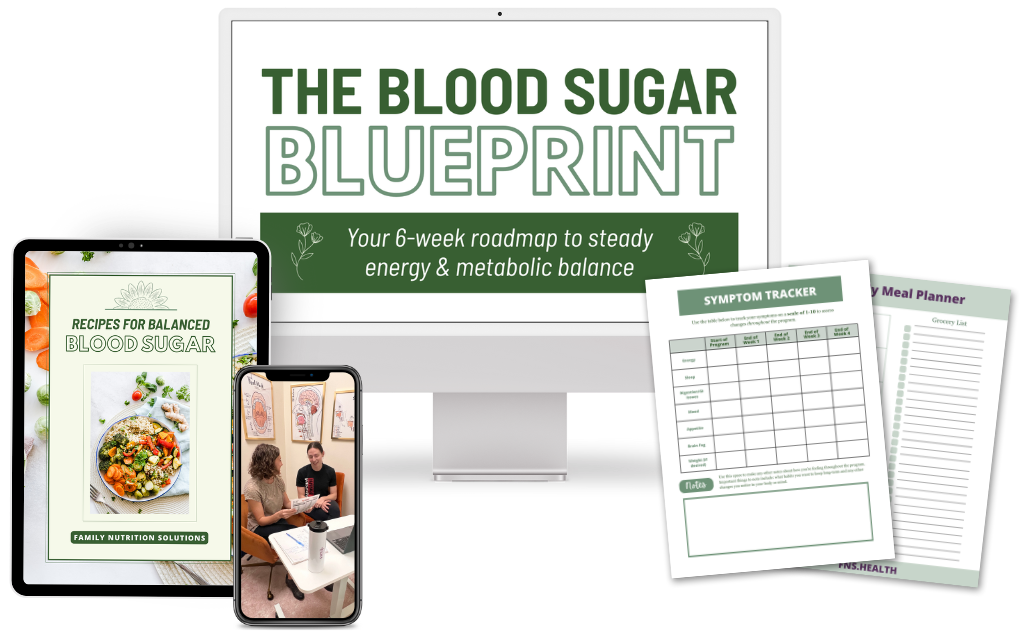
The Blood Sugar Blueprint is our 6-week group program for blood sugar and insulin stabilization. It’s a strong fit for patients with PMOS/PCOS or insulin resistance who are trying to conceive, since steadier blood sugar supports more regular ovulation.
- Six weeks of insulin resistance and metabolic curriculum
- Weekly live coaching (virtual or in-person)
- Meal timing and blood sugar strategies that support hormone balance
- Recipe guides and practical implementation tools
- Optional continuous glucose monitor (CGM) add-on
Fertility Nutrition Counseling May Be Covered by Your Insurance

We’re in-network with Blue Cross Blue Shield, Aetna (including Meritain Health and Aetna State Health Plans), Cigna, UnitedHealthcare, and UMR. Many plans cover nutrition counseling with a dietitian, sometimes as preventive care with no copay, but coverage depends on your specific plan and the reason for your visit. After you schedule and complete your intake forms, we run a free benefits check and let you know what we find before your first visit. No referral is needed to schedule. Learn more on our Insurance page.
Frequently Asked Questions
Can nutrition really help with fertility?
Nutrition affects ovulation, hormone balance, blood sugar, and egg and sperm health. It isn’t a guarantee, but it’s one of the factors you can influence, and it supports a healthier pregnancy too.
When should I start working on my nutrition before trying to conceive?
Ideally about three months before, since eggs and sperm take roughly that long to develop. But it’s never too late to start.
What should I eat to get pregnant?
There’s no single fertility diet. Most people do well with balanced meals that steady blood sugar, enough protein and healthy fats, plenty of plants, and key nutrients like folate. We personalize it to your labs and health history.
Which supplements should I take?
A prenatal vitamin with folate is recommended for anyone trying to conceive. Beyond that, it depends on your labs and history. We’ll review what you’re taking and help you avoid unnecessary or unhelpful products.
Can my partner come to appointments?
Yes, and we strongly recommend it. We can build a plan for male fertility too.
Does a man's diet affect fertility?
Yes. Research links diet quality, blood sugar, weight, alcohol, and nutrients like zinc, folate, and omega-3s to sperm count and quality. Sperm take about three months to develop, so changes made now can make a difference.
Do you work with fertility clinics?
Yes. With your permission, we coordinate with your OB-GYN, urologist, or reproductive endocrinologist.
Do I need to lose weight to get pregnant?
Not necessarily. For some people with PMOS/PCOS or insulin resistance, improving metabolic health can help ovulation, and that doesn’t require extreme dieting. We focus on habits that support fertility at any size.
Why see a registered dietitian for fertility nutrition?
Fertility nutrition involves labs, hormones, blood sugar, and supplements for both partners, and a registered dietitian is the licensed provider trained for this clinical work. In North Carolina, “nutritionist” is a protected title: only licensed providers can use it or provide medical nutrition therapy. Every provider who sees patients at FNS is either licensed in North Carolina, as a licensed dietitian/nutritionist (LDN) or licensed nutritionist (LN), or practicing under the supervision of a licensed dietitian on our team. Our licensed providers have graduate-level training, supervised clinical practice, and a national board exam behind them, so you’re working with licensed nutrition providers, not a health coach or an unlicensed nutritionist.
Do I need a referral?
No referral is needed to schedule. If your insurance plan requires one, we’ll help you get it.
Your Fertility Plan Should Fit Your Body. Let’s Build It Together.
Get clear, personalized nutrition guidance for you and your partner, whether you’re just starting or preparing for fertility treatment.
- 1:1 COUNSELING - HOW IT WORKS