
Why Your Kid Falls Apart at the Cookout (And It's Not Just Being Tired)
Jul 01, 2026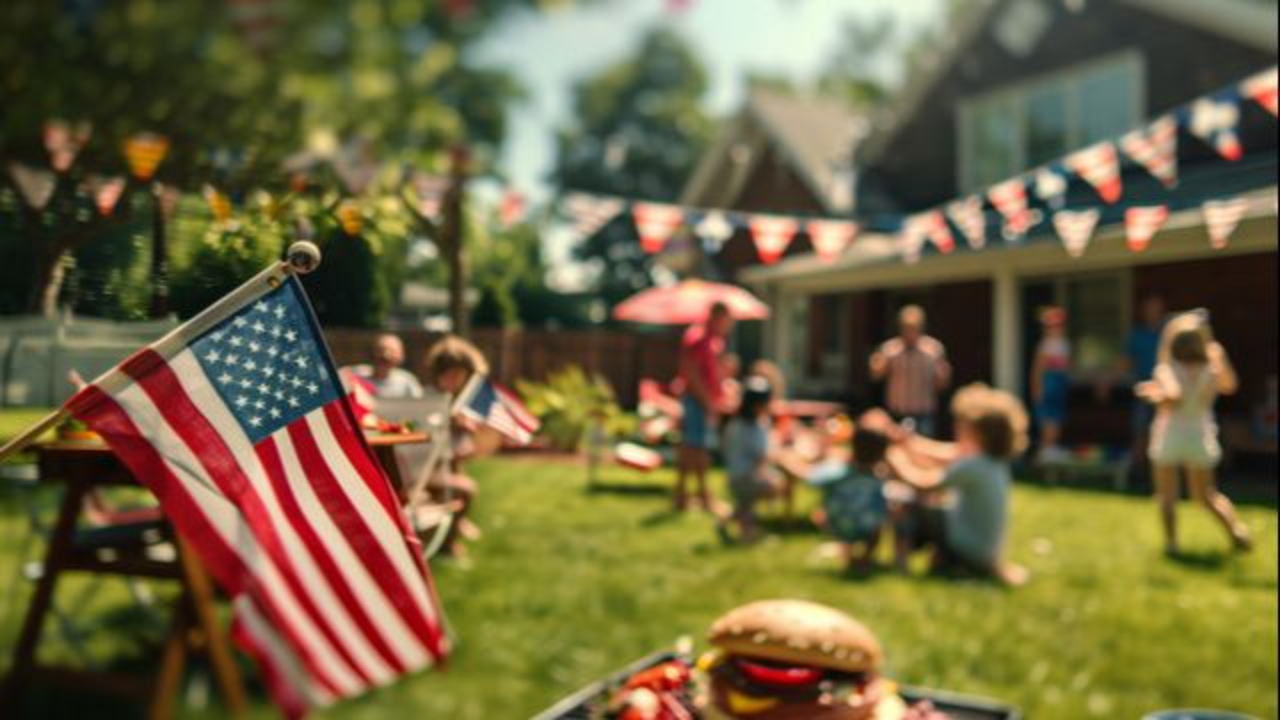
You knew the day would be a lot. You packed the sunscreen, you timed the nap as best you could, you lowered your expectations to a reasonable level. And still — somewhere around 5:30, your kid dissolved. Not tired-fussy. Fully undone. Crying over something that made no sense, refusing the food they asked for four minutes ago, melting into the grass while everyone else fires up the sparklers.
If you've lived this, I want to tell you something: it's probably not (just) the missed nap. And it's probably not that your kid is "too sensitive" or "being dramatic." There's a physical thing happening under the hood, and once you see it, you can't unsee it.
What's actually going on
Look at a typical 4th of July plate through a kid's eyes: a hot dog bun, a scoop of chips, potato salad, watermelon, a cookie, and a cup of something red and sweet to wash it down. Delicious. Also almost entirely fast-digesting carbohydrate, with very little protein or fat to slow it down.
When a plate is mostly quick carbs, blood sugar shoots up fast — and what goes up that quickly comes down just as hard. That crash is where the trouble lives. In a grown-up, a blood sugar dip feels like a foggy, slightly irritable "I need a snack." In a kid, it doesn't announce itself politely. It comes out sideways as behavior: tears, defiance, whining, the classic hangry meltdown over something tiny.
Two things make kids especially prone to it. Their bodies are smaller, so the same sugary plate creates a bigger swing. And their ability to name and manage an uncomfortable feeling is still under construction — so instead of "I feel weird and shaky," you get a full-body no. Add a missed nap and 90-degree heat, and you've built a perfect storm with the crash right in the middle of it.
None of this means sugar is the enemy or that your kid is broken. It's not about the watermelon or the cookie existing. It's about balance — and balance is very fixable.
The plate fix (that isn't about restriction)
Here's the part I love, because it doesn't require you to be the food police at a party:
Anchor the plate with protein first. A burger, some grilled chicken, a scoop of beans — get some protein in before or alongside the carbs.
Why it works: protein slows how fast those carbs hit the bloodstream, which flattens the spike-and-crash into something much gentler.
Add a little fat. Guacamole, olives, a handful of nuts if that's age-appropriate.
Why it works: fat slows digestion even further, stretching that energy out instead of letting it spike and dump.
Keep the fruit and the fun — just pair them. Watermelon eaten next to a protein lands completely differently than watermelon eaten alone.
Why it works: the goal was never to remove the carbs. Pairing is the whole game.
Front-load before the party. Send them in with a real, balanced snack already in the tank — something with protein and fat — so the first thing they eat at the cookout isn't a fistful of chips on an empty stomach.
Why it works: an empty-stomach carb hit is the one that spikes hardest.
Don't skip the water. Heat and dehydration make cranky worse and are easy to miss when everyone's distracted. Watermelon actually pulls double duty here.
In practice: a few bites of burger, some guac, watermelon on the same plate, water in the cup — and the same kid who would've crashed at 5:30 has a much better shot at making it to the sparklers.
Does the crash happen more often than a cookout?
In the short term, the stakes are one evening. The one you looked forward to, spent in the parking lot doing damage control while everyone else watches the show. That's reason enough.
But if you're reading this nodding — because the cookout crash looks a lot like the after-school crash, or the pre-dinner witching hour, or the battle every single morning — then the 4th of July is just the loud version of something that's happening quietly all week. Steady blood sugar affects far more than mood: it shapes focus, sleep, and how much gas a kid has in the tank to handle big feelings. That's worth understanding, not white-knuckling.
How we think about it at FNS
Most advice about kids and sugar stops at "limit the sugar." We think that misses the point — it's restrictive, it makes food scary, and frankly it doesn't work with a real child at a real cookout. We'd rather look at the whole picture: what's on the plate together, the timing around it, and whether there's an underlying pattern driving the daily rollercoaster. Root cause, not just a rule.
We're also a family practice that takes insurance, which means getting real help with this is usually more accessible than parents expect.
If the meltdowns are more than a holiday thing, we'd love to help you get to the bottom of it.
Book a visit — and in the meantime, go enjoy the cookout.