
Normal Labs But Still Feel “Off”? Here’s What Could Be Missing
May 20, 2026
You finally book an appointment with your doctor because something feels off.
You’re exhausted all the time. Your digestion feels sluggish and you’re constantly bloated. Your mood is low, your energy is unpredictable, and you just don’t feel like yourself. So your doctor orders bloodwork, and you’re eager to finally get some answers.
Then the call comes back: “Everything looks normal.”
And suddenly, instead of feeling reassured, you feel confused. If your labs are normal, why do you still feel so bad? You start to think, “Is it in my head? Should I be relieved that there’s nothing obviously wrong? How can everything be normal when I feel so awful all the time?”
Many people leave these appointments feeling frustrated, dismissed, or unsure whether they’re overreacting. But the reality is that “normal” lab work does not always mean your body is functioning optimally.
What’s Actually Going On?
One of the biggest misconceptions about bloodwork is the idea that “normal” automatically means “healthy” or “thriving.” Traditional lab ranges are primarily designed to help identify disease, not necessarily early dysfunction or suboptimal health.
Most standard lab reference ranges are created using averages from the general population. That means the “normal” range includes many “healthy” people who may still be dealing with fatigue, poor nutrition, blood sugar issues, chronic stress, digestive problems, or inflammation.
When your doctor reviews lab work, they are looking for significant abnormalities or red flags that suggest a diagnosable condition. If your results fall within the standard reference range, it usually means there is a low likelihood of a serious disease process occurring.
But many people can still experience symptoms long before labs become abnormal enough to trigger those red flags. This is where a functional interpretation of lab work can sometimes provide additional insight.
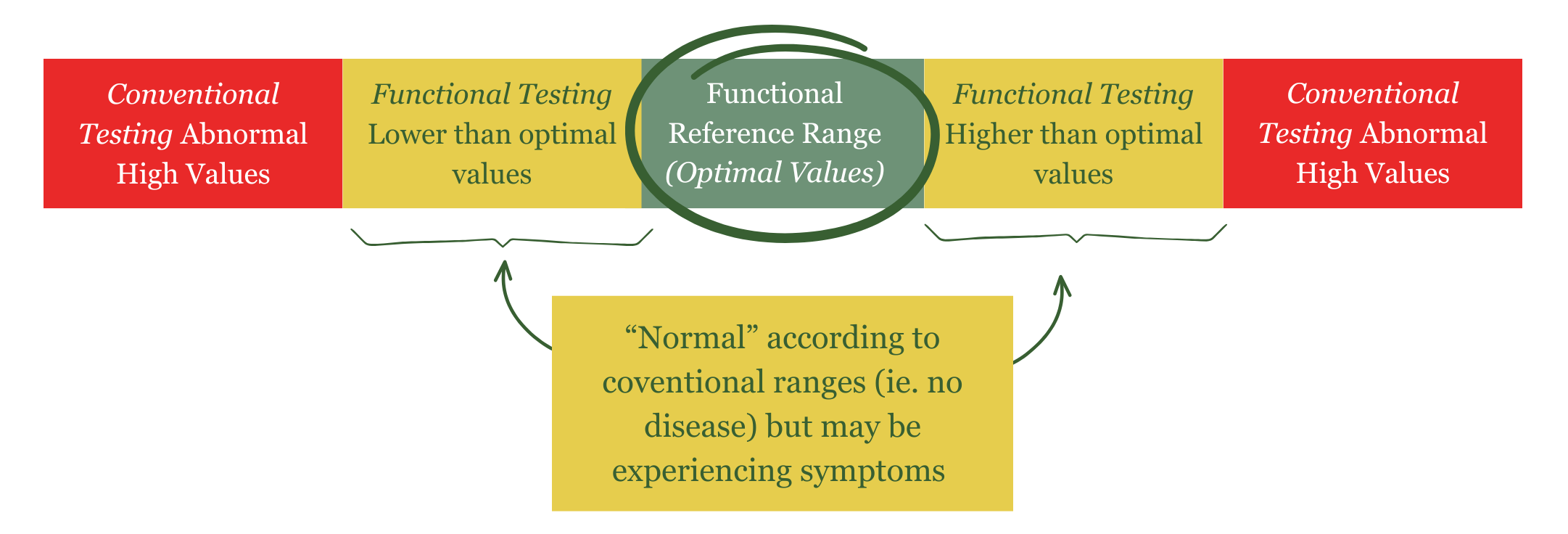
Instead of only looking for disease, functional nutrition practitioners look for “yellow flags” — subtle patterns or trends outside of the optimal range that may suggest the body is struggling, before a full condition develops. Sub-optimal ranges in lab work can help to identify…
- Thyroid dysfunction
- Nutrient deficiencies
- Inflammation
- Insulin resistance
- Gut motility issues
When these yellow flags are spotted early, they can be addressed before they progress into more significant imbalances or clinical conditions.
Common Reasons You May Feel Unwell Even When Labs Are “Normal”
1. Your Labs Are “Normal,” But Not Optimal
There’s a difference between falling somewhere within a broad reference range and being in a range where the body tends to function best.
For example, someone may technically fall within the normal range for nutrients like iron, B12, or vitamin D, while still experiencing symptoms associated with lower levels.
This doesn’t mean conventional medicine is “wrong”, it simply means reference ranges and optimal wellness are not always measuring the same thing.
2. Early Dysfunction Can Show Up Before Disease Does
Many health conditions develop gradually over time. Long before a diagnosis appears, people may experience symptoms like:
- fatigue
- constipation
- bloating
- mood changes
- brain fog
- poor recovery
- unstable energy
Sometimes these symptoms reflect subtle shifts in areas like blood sugar regulation, nutrient status, thyroid function, inflammation, or digestion, before lab values become clearly abnormal. This is a stage where there may be an opportunity to make supportive nutrition and lifestyle changes, before those patterns progress into more significant dysfunction or disease over time.
3. Standard Bloodwork Doesn’t Measure Everything
Routine bloodwork is incredibly valuable, but doctors are often limited to the standard tests that are commonly used to screen for major diseases or conditions.
In some cases, additional or more specialized testing may help uncover patterns that aren’t obvious on routine labs alone. Depending on someone’s symptoms, this could include more comprehensive thyroid testing, insulin and blood sugar markers, inflammation markers, hormone testing, nutrient testing, or functional gut testing.
This doesn’t mean everyone needs extensive testing. But for people dealing with ongoing symptoms despite “normal” labs, more in-depth assessment can provide helpful insight into areas that may not be routinely evaluated in conventional care.
4. Multiple Small Imbalances Can Add Up
Sometimes there isn’t one major issue causing symptoms, but rather several smaller stressors happening at the same time.
For example, mild nutrient insufficiencies combined with poor sleep, chronic stress, blood sugar instability, and digestive dysfunction can collectively leave someone feeling exhausted or unwell, even if no single lab marker looks alarming on its own.
The body functions as an interconnected system, which means small imbalances across multiple areas can still have a very real impact on how you feel.
What You Can Actually Do
If you’ve been told your labs are normal but still don’t feel well, it doesn’t mean your symptoms are “all in your head.”
It may simply mean the body is showing signs of stress or dysfunction that aren’t severe enough yet to show up as major abnormalities on standard lab work.
Instead of focusing only on whether labs are technically normal, it can be more helpful to look at the bigger picture:
- energy patterns
- digestion
- nutrient intake
- blood sugar balance
- stress levels
- sleep quality
- inflammation
- overall lifestyle patterns
Looking at these patterns together can help identify areas that may be contributing to symptoms, so you can start making changes to feel better.
Why You Shouldn’t Ignore Your Symptoms
When symptoms are dismissed for long periods of time, many people stop trusting their bodies or assume they just need to “push through” feeling unwell.
But ongoing fatigue, digestive symptoms, mood changes, and low energy are still signals worth paying attention to, even if standard labs don’t show a major problem yet. In some cases, these early patterns can eventually progress into more significant dysfunction over time.
When to Get Extra Support
You know your body best, and if something consistently feels “off,” it’s worth paying attention to. While occasional fatigue, bloating, or low energy can happen from time to time, ongoing symptoms that affect your quality of life deserve a closer look, especially if you feel like you’re not getting clear answers.
It may be helpful to work with a dietitian or healthcare practitioner if:
- you constantly feel tired despite “normal” labs
- digestive symptoms are affecting daily life
- you struggle with ongoing bloating or constipation
- your energy, mood, or focus feel consistently off
- you suspect nutrition or lifestyle factors may be contributing
A dietitian trained in functional nutrition can help you understand the bigger picture and identify patterns that may be contributing to how you feel.
At Family Nutrition Solutions, our team helps you uncover the root cause of your symptoms and build a plan that supports you in getting back to feeling your best. We can gather a lot of valuable insight from routine bloodwork, recommend additional bloodwork when needed, or discuss specialized functional testing options, so you can choose an approach that fits your goals.
You don’t have to wait until things become severe to start paying attention to your health.
Tap here to request an appointment with a member of the Family Nutrition Solutions team.